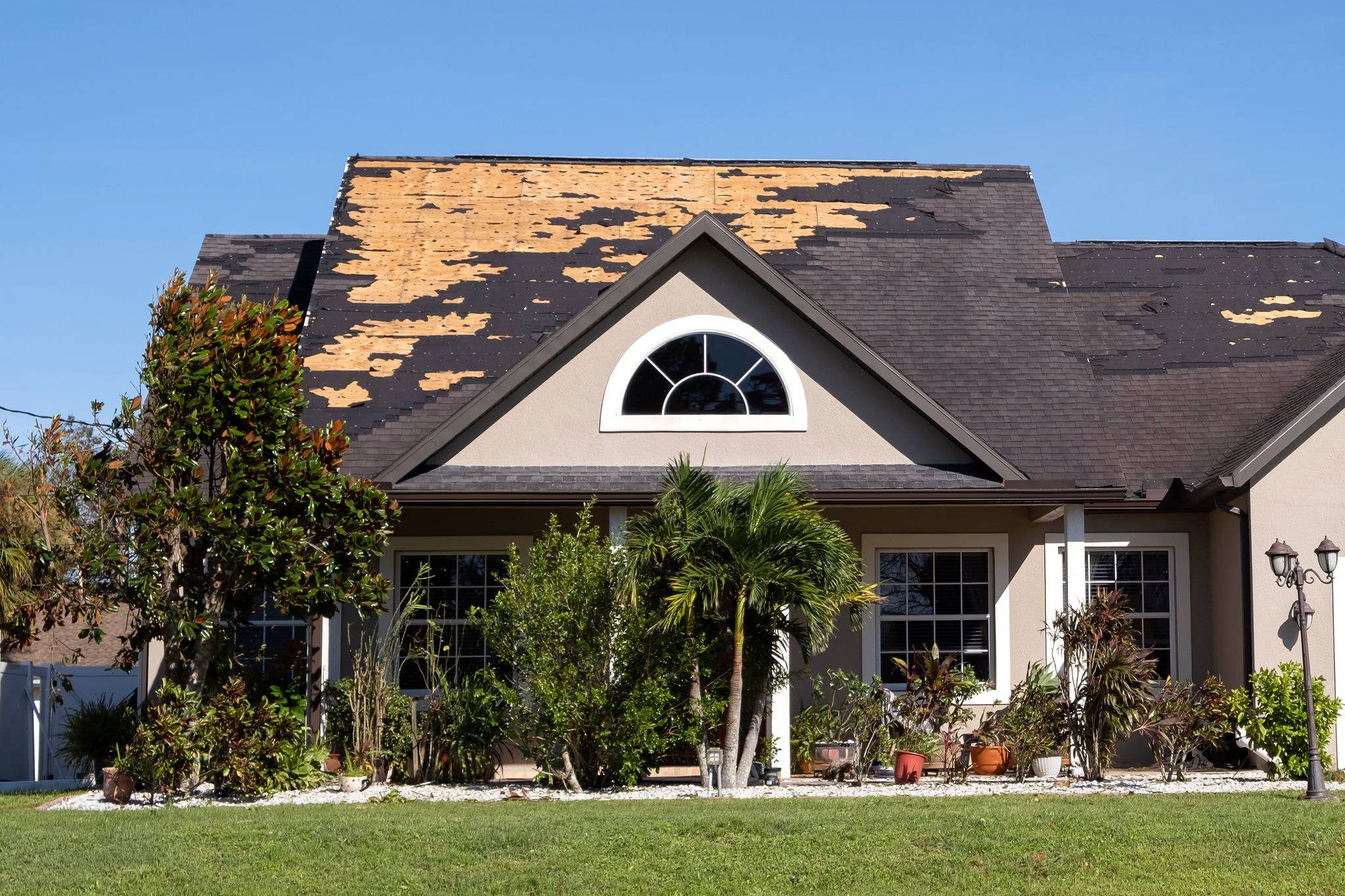
Does Homeowners Insurance Cover Storm Damage?
Homeowners insurance covers storm damage like tornado, wind and hail damage, but not floods. See what's covered, what's not and how to prepare your home.

by COUNTRY Financial
About one in four homeowners has already dealt with storm-related damage to their home, and among those who haven't, about a third are concerned it could happen in the future, according to the COUNTRY Financial Security Index® survey. Tornado insurance coverage isn't a separate line item on a homeowners policy. It runs through the same named perils already built into a typical homeowners policy, which makes a coverage check worth doing before a storm arrives rather than after.
Find out more about home insurance.
Find out more about home insurance.
A typical homeowners insurance policy is generally designed to help cover storm damage. COUNTRY Financial names these among the causes of physical damage a policy is intended to address:
That protection runs through two coverages: dwelling coverage for the main structure, and other structures coverage for things like a detached garage or shed. Once the deductible is paid, both help cover the remainder of the damage up to policy limits.
Standard coverage applies to a defined list of named perils:
Tornado damage falls under this wind/hail peril rather than its own separate category. Premier coverage extends that protection to most other causes of loss unless specifically excluded, broader than the named list Standard coverage relies on.
Coverage options, limits and endorsements can also vary by state, so what applies to one home may not apply the same way in a neighboring state.
A tornado's wind can also drive rainwater into a home. That resulting water damage generally falls under dwelling coverage the same way a burst pipe would, though flooding itself is typically excluded.
Flood damage and earthquake damage both fall outside a standard homeowners policy, for different reasons: floods can be storm-driven, while earthquakes are a separate, unrelated cause of ground movement that a storm doesn't create. Sewer or drain backup typically isn't included either, and that gap often shows up when heavy rainfall overwhelms a city's sewer system during the same storm. A list of additional exclusions found in a typical policy:
Some of these gaps can be closed through separate coverage. A sump pump or sewer backup endorsement can be added directly to a COUNTRY Financial policy, while flood insurance is typically available through separate programs like the National Flood Insurance Program, and earthquake coverage is typically added to a policy through an endorsement, similar to sump pump or sewer backup coverage.
Adding flood coverage matters most for a home already sitting in a flood-prone area or a region with a history of sewer overflow during heavy storms.
A gap like that is harder to address once it's discovered mid-claim instead of beforehand. Reviewing coverage before a storm season starts gives homeowners a chance to help close one of these gaps while options are still open.
A few prep steps might help reduce the severity of damage from a tornado if one does hit:
Confidence and preparation don't always match. According to the COUNTRY Financial Security Index® survey, 77% of homeowners say they have enough saved to cover their deductible after major damage, but the same survey found real gaps: 58% haven't completed a home inventory of their belongings, and 20% say they'd like to review their policy to become more familiar with it.
A property that includes farm buildings or equipment faces its own power-loss risk during severe weather. Keeping a generator in working order and its fuel supply stocked can help reduce that risk, the same way a battery or water-powered back-up system helps keep a home's sump pump running during a power outage.
Having insurance and property information on hand may help speed up that first call if a claim becomes necessary, whether that's through the COUNTRY Financial mobile app or a paper copy kept somewhere safe.
The same generator upkeep that matters for safety can also lower a premium. A few discounts line up directly with storm readiness:
Eligibility for each discount is evaluated on its own, so qualifying for one doesn't guarantee qualifying for another. Mentioning every connected device or safety feature to a representative matters, since eligibility isn't always obvious from the discount name alone.
Filing a claim after a tornado follows a four-step process:
A few immediate steps matter before the adjuster arrives:
Most policies also set a time limit for reporting damage, and homeowners can choose their own contractor for repairs.
How long the claim takes from there depends on the severity of the damage, contractor availability and local regulations. Minor claims tend to resolve quickly, while larger losses take longer because of inspections, estimates and rebuilding requirements.
The eventual payment depends on policy limits, the deductible and the settlement option chosen.
A storm tore the roof off the Demierre family's home while they were away on a camping trip. They came home to belongings scattered across the field and the rest soaked by the downpour that followed the roof failure. The COUNTRY Financial claims process got them on track to a new home, though every claim depends on its own policy and circumstances.
Filing may affect future rates depending on claims history and state regulations.
A conversation with a representative can help confirm which discounts and coverage levels would apply. Start a quote with COUNTRY Financial, or talk with a local representative about how coverage and discounts apply to a specific home.
Yes, a typical homeowners insurance policy is generally designed to help cover tornado damage, along with hail, lightning, fallen trees and heavy snow and ice, through dwelling coverage and other structures coverage.
Tornado insurance coverage typically excludes floods and earthquakes, along with sewer or drain backup, wear and tear, damage while a home sits vacant or under construction, business activity run from the home and certain pest damage.
Filing a tornado damage home insurance claim follows a four-step process: file the claim, connect with an adjuster, review the damage and fix the home. Before the adjuster arrives, prevent further damage where safe, turn off utilities if needed, document the damage with photos or video and keep receipts for emergency repairs.
Standard coverage applies to a defined list of named perils, including wind/hail, fire, lightning, freezing pipes, theft and vandalism. Premier coverage extends protection to most other causes of loss unless specifically excluded, broader than the named list Standard coverage relies on.
Published 9-22-26
Homeowners insurance covers storm damage like tornado, wind and hail damage, but not floods. See what's covered, what's not and how to prepare your home.
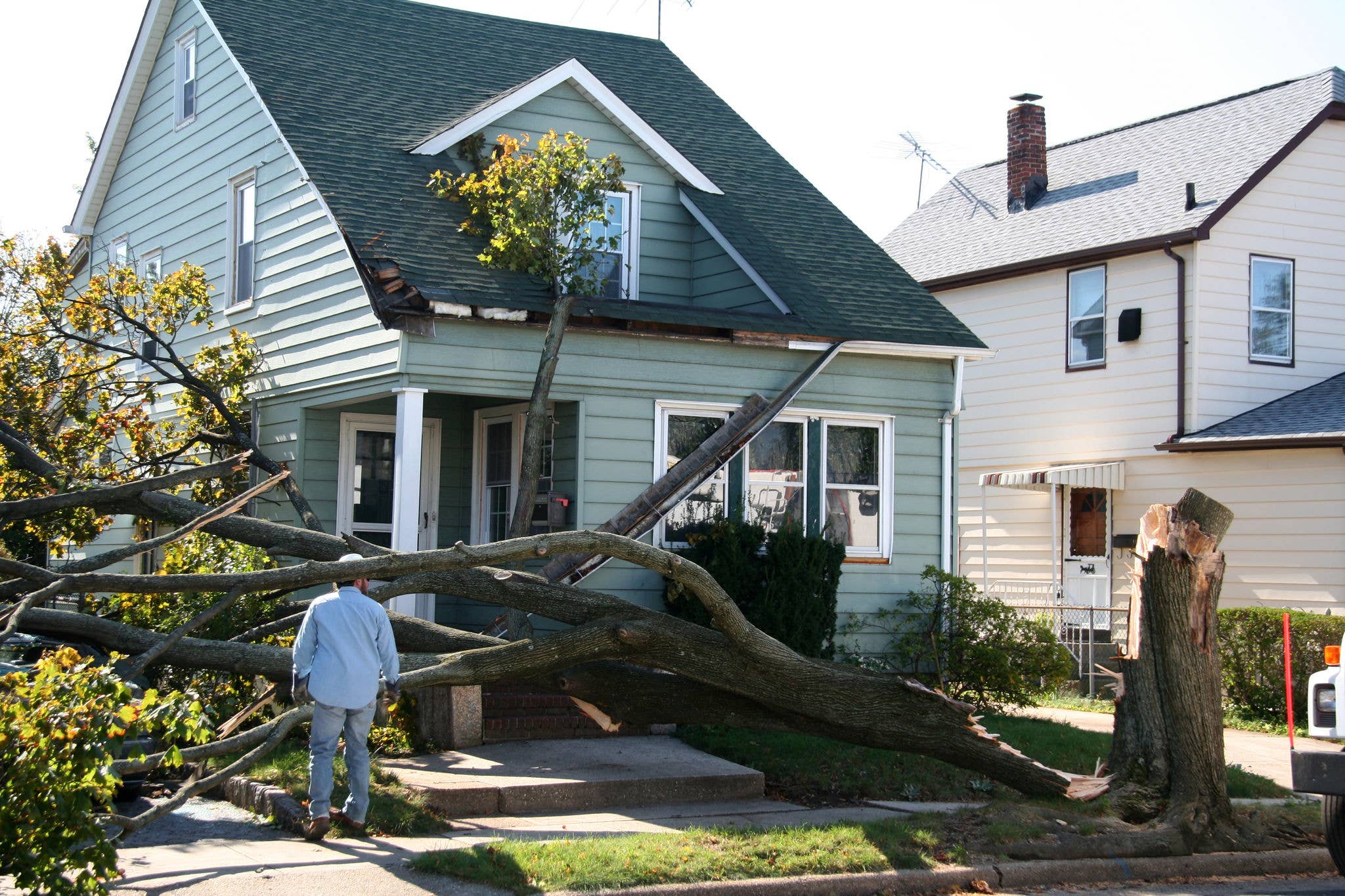
Wind damage is most likely covered by your homeowner’s policy, but some exclusions can apply. Learn more about when it is covered, when it is not, and more.
Home insurance covers water damage that is sudden and accidental. Learn about what damage can be covered through your policy, flood damages, and more.
Start a quote or call us at 866-COUNTRY (866-268-6879). Find out more about home insurance.
Contact your rep or call us at 866-COUNTRY (866-268-6879). Find out more about home insurance.
COUNTRY Financial® is a family of affiliated companies (collectively, COUNTRY) located in Bloomington, IL. Learn more about who we are.
Home insurance policies issued by COUNTRY Preferred Insurance Company®, Bloomington, IL.
We take pride in providing accurate, truthful information in our articles. See our editorial standards to learn more.
The descriptions provided are for general informational purposes only and are not intended to constitute an insurance policy or to modify, amend or extend the terms, conditions or coverages of any insurance policy. Coverage, terms, limitations and exclusions vary. For complete details, please refer to the applicable insurance policy or contact a COUNTRY Financial representative.