
What Is Car Insurance?
What is car insurance? We’ll explain all the types of coverage to help you understand how car insurance works so you can find the protection you need.
By COUNTRY Financial
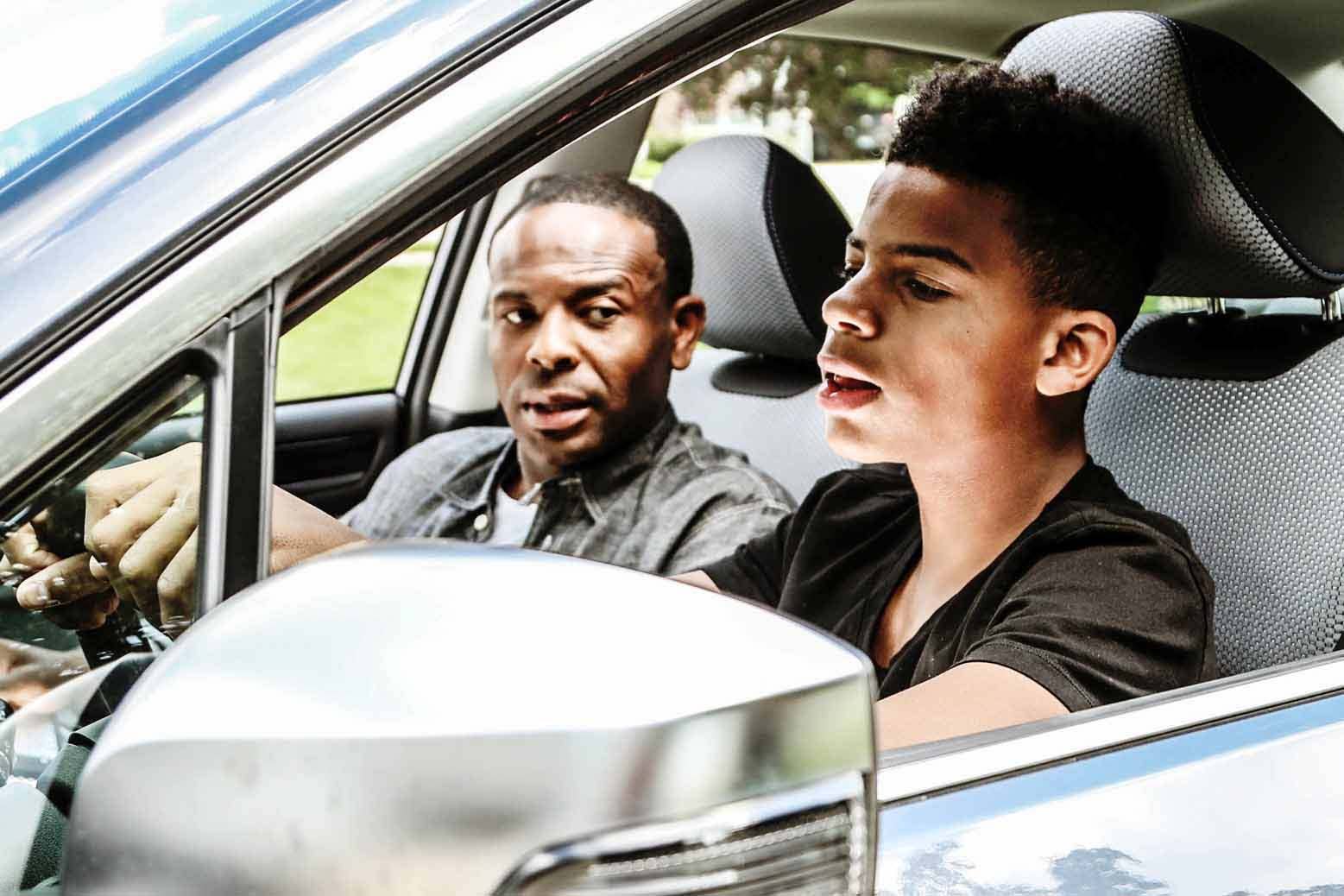
Parenting can be tricky at any life stage, but parents face a range of new challenges when their teenagers start driving. You want your teens to enjoy their newfound independence, but how do you make sure they stay safe on the road?
Find out more about car insurance.
Find out more about car insurance.
According to the Centers for Disease Control¹, motor vehicle crashes are the leading cause of death for teens (ages 13–19) in the U.S. Per mile driven, teen drivers ages 16 – 19 have a fatal crash rate almost three times as high as drivers ages 20 and older.
Statistics like these make it difficult to hand over the keys to your new driver, but there are many ways to instill safe driving behavior. Try these methods to prepare your teenager to safely take the wheel.
From smartphones to touch screen monitors and satellite radio, we’re surrounded by more distracting technology in our cars than ever before. A split-second glance at a screen can end in tragedy for your teenager, their passengers, and other drivers, so make sure you discuss using tools to help keep their eyes on the road. For example, many smartphones offer apps that will disable incoming texts while the car is moving and will alert the person who sent the text that the recipient is driving and can’t respond at that time.
Teach your new driver to plan ahead to avoid potential driving distractions. Before starting the ignition, your teen should handle all the tasks he or she may be tempted to do while driving, queuing up their playlist and inputting their destination into a map app. Don’t forget fundamental safety precautions like checking mirrors and buckling seatbelts. Making it a habit to complete these steps before they pull out of the driveway can help make sure they get there safely.
Teens' lack of driving experience and maturity can make them riskier drivers. They are often tempted to speed, run red lights, roll through stop signs, and otherwise break the law while driving. All 50 states and the District of Columbia have enacted a three-stage graduated driver licensing system that reduces high-risk driving situations for new drivers: a learner's permit stage with supervised driving, an intermediate license stage with restrictions like limited passengers, nighttime curfews and cell phone use, and a full, unrestricted license once those requirements are met.
All states also enforce zero tolerance laws, making it illegal for anyone under 21 to drive with any measurable amount of alcohol in their system, a stricter standard than the legal limit for adult drivers.
Graduated licensing rules vary from state to state. The Insurance Institute for Highway Safety² maintains a state-by-state table of these laws that can help you know exactly what applies where you live.
Beyond state law, many families also set their own driving rules for teenage drivers through a written parent-teen driving agreement covering curfews, passenger limits, phone use and other household expectations, an approach the CDC specifically recommends.
Many insurance companies, including COUNTRY Financial, offer auto telematics apps that gather data on things like acceleration, braking, cornering and phone usage. Auto telematics programs also reward drivers for safe driving with a discount on car insurance. Learn more about COUNTRY Financial DriverIQ.
Because teens are typically riskier drivers, their car insurance rates can be more expensive than for an adult driver. However, there are ways to save money on car insurance for teens, such as:
Take a safe driving course. COUNTRY offers Simply Drive², an online course that, if completed, can result in a 10% discount on car insurance.
Keep those grades up! Full-time students with at least a B grade point average could save up to 35% on car insurance with a Good Student Discount.
Learn more about car insurance.
Safe driving tips for teens include putting phones away before starting the car, queuing up music and directions ahead of time, always wearing a seatbelt, and limiting nighttime driving and passengers until they gain more experience.
Teenage driving laws vary by state but generally follow a three-stage graduated driver licensing system: a learner's permit, an intermediate license with restrictions like limited passengers and nighttime driving, and a full license.
Beyond state law, many families set their own driving rules for teenage drivers, often through a written parent-teen driving agreement covering curfews, passenger limits, phone use and other household expectations, an approach recommended by the CDC.
Ways to save on car insurance for teenagers include completing a safe driving course like COUNTRY's Simply Drive, maintaining a strong grade point average for a Good Student Discount, and using telematics programs like DriverIQ that reward safe driving habits.
Published 8-31-26
What is car insurance? We’ll explain all the types of coverage to help you understand how car insurance works so you can find the protection you need.

Explore potential ways to approach car insurance costs through safe driving habits, available discounts and coverage decisions based on your situation.
Start a quote or call us at 866-COUNTRY (866-268-6879). Find out more about car insurance.
Contact your rep or call us at 866-COUNTRY (866-268-6879). Find out more about car insurance.
Sources
¹ Centers for Disease Control and Prevention, Teen Drivers
² Insurance Institute for Highway Safety, Teenagers: Graduated Licensing Laws
COUNTRY Financial® is a family of affiliated companies (collectively, COUNTRY) located in Bloomington, IL. Learn more about who we are.
Auto insurance policies issued by COUNTRY Mutual Insurance Company®, COUNTRY Preferred Insurance Company® and COUNTRY Casualty Insurance Company®, Bloomington, IL.
We take pride in providing accurate, truthful information in our articles. See our editorial standards to learn more.