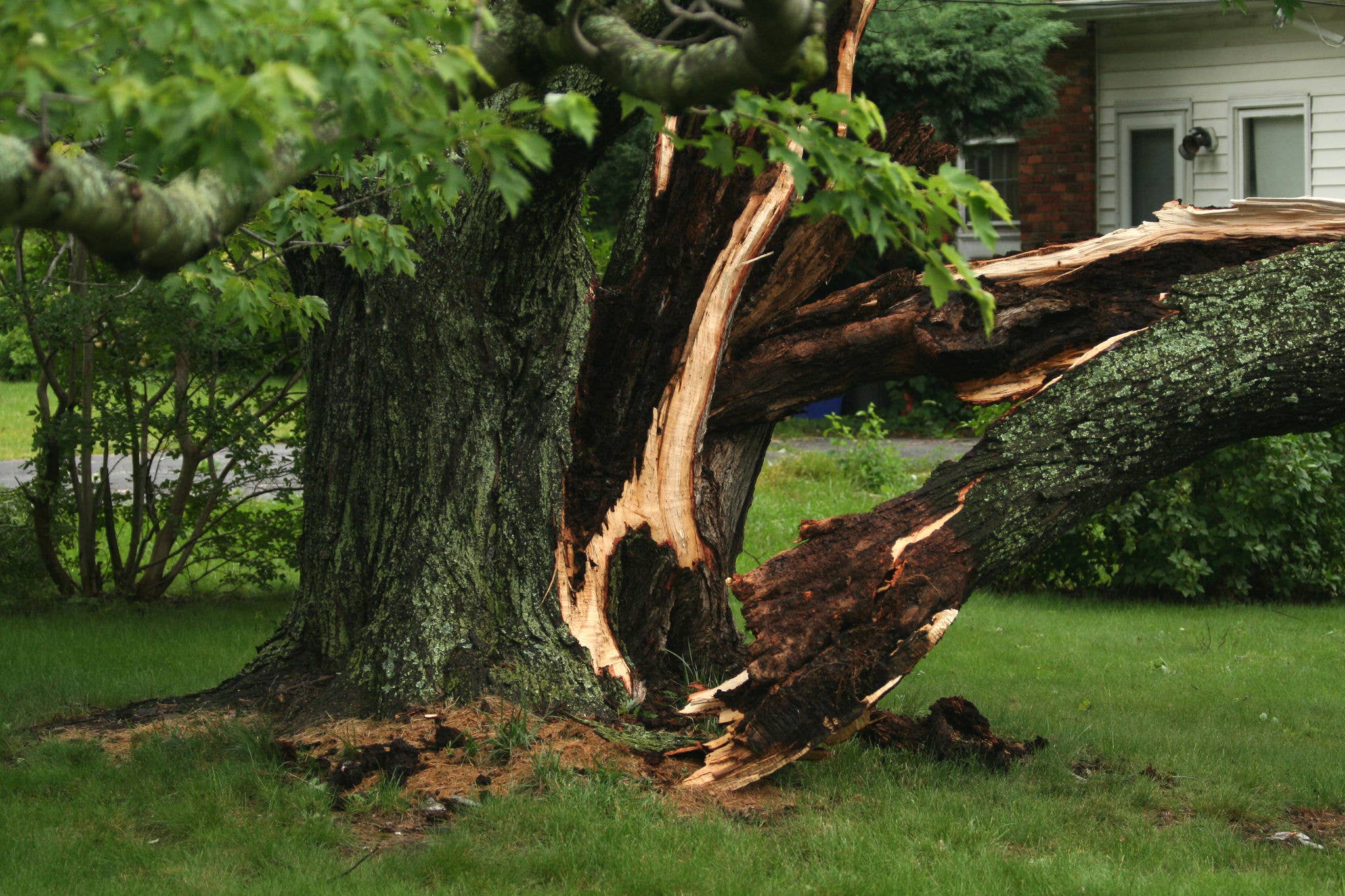
Does Homeowners Insurance Cover Fallen Trees?
If a tree falls due to a covered peril, your homeowner's insurance will most likely cover the costs. Learn about what services are covered and more.

By COUNTRY Financial
A standard home insurance policy is designed to help with sudden, accidental damage, like a kitchen fire or a windstorm that tears off shingles. It isn't designed for every problem a house can have. Damage that builds slowly, damage tied to upkeep and a few large natural hazards are typically excluded or limited.
This guide covers 10 types of damage that standard policies typically exclude, why they are treated differently and which separate policies or endorsements may be available. Coverage depends on your policy language, the cause of the loss and the state where you live, so your own policy documents spell out what applies to your home.
Find out more about home insurance
Find out more about home insurance
| Type of damage | Why it's typically excluded | Coverage that may be available |
|---|---|---|
| Flood | Rising water can affect entire communities at once | Separate flood policy, often through the National Flood Insurance Program (NFIP) |
| Earthquake and earth movement | Damage can be widespread and severe | Earthquake endorsement or separate policy, where available |
| Sewer and drain backup | Falls outside standard water damage provisions | Water backup or sump pump endorsement |
| Mold from long-term moisture | Usually tied to an ongoing moisture problem | Generally none |
| Wear and tear | Aging is expected, not sudden | Generally none |
| Neglect and gradual leaks | Damage develops from an unaddressed problem | Generally none |
| Pests and vermin | Damage develops slowly over time | Generally none |
| Damage to a vacant home | Vacancy changes the risk of certain losses | Varies by policy |
| Home business losses | Business property and liability fall outside personal coverage | Business policy or endorsement |
| Underground service lines | Lines outside the home are often excluded | Service line endorsement may be available |
Insurance is designed to cover sudden and accidental losses. Damage that develops over time, results from lack of maintenance or is caused by certain large-scale catastrophic events may be excluded or have limited coverage under the policy. Some of those risks can be addressed with an endorsement or a separate policy, while others are treated as part of owning a home.
The difference often comes down to timing and cause. Each covered event, called a peril, is listed or described in your policy. A pipe that bursts during a cold snap is a sudden event. A slow drip under a sink that rots the subfloor over several months is gradual. Many policies treat those two water problems differently, even though both leave you with damaged floors.
Two neighbors in Iowa both find roof damage after a spring storm. One roof was punctured by a falling limb during high winds. The other leaks because its 25-year-old shingles have worn thin. The first is a sudden event that may be covered, subject to the policy terms and deductible. The second is typically treated as wear and tear. This is just an example: every claim depends on the policy, the cause of loss and specific circumstances.
An exclusion is a section of the policy that lists causes of loss the policy does not cover. An endorsement is an add-on that changes the policy, sometimes adding back coverage an exclusion would otherwise remove. The optional coverages available on a home policy vary by insurer and state, and each one may carry its own limits and deductible.
Flood and earthquake damage are two of the largest risks that standard home policies typically exclude. Flood coverage usually comes from a separate policy, often through the National Flood Insurance Program (NFIP). Earthquake coverage may be available as an endorsement or a separate policy. Both carry their own terms, limits and deductibles.
In insurance terms, flooding generally refers to surface water that rises from the ground or overflows from rivers, lakes or heavy rain runoff. Water from a burst pipe inside the home is a different type of loss. FEMA estimates that just one inch of floodwater can cause roughly $25,000 of damage to a home, and it reports that 99% of U.S. counties have experienced a flood.
Flood insurance is a separate policy with its own deductible and limits. Many homeowners get it through the NFIP, which FEMA manages. A few details worth knowing:
Flood coverage generally sits outside your home policy, so a home policy claim and a flood claim follow different rules.
NFIP policies typically have a 30-day waiting period before coverage takes effect, with some exceptions, such as a purchase tied to a new mortgage.
Standard policies typically exclude earthquakes and other earth movement, such as landslides and ground shifting. Earthquake risk reaches well beyond the West Coast. The U.S. Geological Survey's 2023 National Seismic Hazard Model found that nearly 75% of the U.S. could experience damaging earthquake shaking. The same release notes that 37 states have recorded earthquakes stronger than magnitude 5 in the last 200 years.
At COUNTRY Financial, about 7% of new homeowner clients opted to purchase earthquake coverage, according to a January 2025 article. That share ranged from 14% in Alaska to less than 1% in other states. Earthquake coverage typically uses a percentage deductible, which is calculated as a share of the coverage limit rather than a flat dollar amount.
Securing water heaters, bookcases and other heavy items may reduce damage during a quake. Whether a loss is covered is a separate question that depends on the policy and any endorsement in place.
Standard home policies often address sudden water damage, such as a burst pipe, but typically exclude water that backs up through sewers or drains. Mold is also typically excluded. Backup coverage may be available as an optional endorsement.
Water or sewage that backs up through floor drains, toilets or a failed sump pump is typically excluded from a standard policy. The EPA estimates that at least 23,000 to 75,000 sanitary sewer overflows occur each year in the U.S., and that count doesn't include sewage backups into buildings. Blockages, line breaks and stormwater overloading the system are among the causes the agency lists.
An optional endorsement for sewer and drain backup or sump pump failure may be available. For homes with a finished basement or a sump pump, that optional coverage may be worth a closer look, since basements are where backup water typically collects.
Mold is typically excluded from a standard home insurance policy, whether it grows from ongoing humidity, a slow leak or poor ventilation. Requirements vary by state, so a policy issued in some states may address mold differently.
The EPA's guide to mold notes that mold won't grow without water or moisture, which is why it identifies moisture control as the key to controlling mold. Common moisture sources in a home include roof leaks, plumbing leaks, condensation on cold surfaces and damp basements.
Home insurance is generally not intended for damage that develops over time as a house ages, goes without maintenance or is damaged by pests. These costs are typically treated as part of owning a home rather than as insured losses. Regular maintenance and inspections may reduce the chance that small problems turn into larger repairs.
Every part of a home has a service life. Roof shingles wear thin, wood decks weather and water heaters eventually fail. Replacing a component because it's old is typically treated as a maintenance cost. A wood deck that rots and becomes unsafe is one example. Replacing that deck would generally be the homeowner's responsibility.
Neglect exclusions typically apply when damage results from a known problem that wasn't addressed. A slow leak under a bathroom sink, missing roof flashing or a clogged gutter that sends water toward the foundation for months are common examples. A seasonal home maintenance checklist may help catch these issues early.
Clogged gutters and downspouts
Cracked or missing caulk around tubs and showers
Aging supply hoses on washing machines and dishwashers
Damaged shingles left unrepaired after a storm
Poor ventilation in attics and bathrooms
Damage from termites, rodents, insects and birds is typically excluded. According to the University of Missouri Extension, about $4.5 billion is spent each year in the U.S. to control subterranean termite infestations. The same publication notes that significant termite damage typically takes months or years of feeding to develop. That slow timeline is consistent with how policies treat pest damage, as a gradual problem rather than a sudden event.
Periodic inspections by a licensed pest control professional may help identify activity before it spreads.
Some exclusions depend on how a home is used rather than on what damaged it. A home left vacant, a business run from the home and underground utility lines outside the house can each fall outside standard coverage. Endorsements or separate policies may address some of these gaps, depending on the insurer and state.
Policies may limit or exclude certain causes of loss, such as vandalism, glass breakage or water damage, once a home has been vacant longer than a period stated in the policy. Vacancy can come up when a home is listed for sale, sits between tenants or stays empty after an owner moves into assisted living.
Personal property coverage often limits coverage for business equipment, and personal liability coverage typically excludes injuries tied to business activity. A bookkeeper in Boise who meets clients at home or a baker in Tulsa who sells from a home kitchen are two examples where this gap can come up. Depending on the size of the operation, a home business endorsement or a business owners policy may be worth considering.
Water, sewer and electrical lines that run from the street to the house are often the homeowner's responsibility. Damage to these lines from age, tree roots or ground shifting typically falls outside a standard policy. A service line endorsement may be available for exterior underground piping and wiring connected to the home.
A policy review may help identify which of these exclusions apply to your home and whether an endorsement or a separate policy fits your situation. The declarations page lists your coverages, limits, deductibles and endorsements. The full policy spells out the exclusions and the conditions that apply to each one.
Your declarations page and full policy
Details about your basement, sump pump and the age of your roof
Any business activity that happens in your home
Which causes of loss does my policy exclude?
Is my home in a mapped flood zone, and is flood insurance available for it?
Is an earthquake, water backup or service line endorsement available in my state?
How does my policy treat mold?
Which deductibles apply to each type of claim?
A local COUNTRY Financial representative can walk through these questions with you. This checklist is meant to help you prepare for that conversation. It isn't a recommendation for any specific coverage.
Standard home policies are generally designed for sudden, accidental losses. Flood, earthquake, water backup, mold, wear and tear, neglect, pests, vacancy, home business activity and underground service lines typically fall outside that design. Some of these gaps can be addressed with a separate policy or an endorsement. Others come down to maintenance. Reviewing what home insurance covers alongside its exclusions gives a fuller picture of where your policy starts and stops.
Home insurance may cover sudden and accidental water damage, such as a burst pipe. Flooding, sewer backup and long-term leaks are typically excluded unless additional coverage has been added. Coverage depends on the cause of the damage and your policy terms.
Standard home insurance policies typically do not include flood coverage. Flood insurance is a separate policy, often available through the National Flood Insurance Program.
Earthquake coverage may be available as an endorsement or a separate policy, depending on the insurer and state. Earthquake coverage often has a percentage deductible, and limits vary by policy.
Termite and other pest damage is typically excluded because it develops gradually. Prevention and periodic inspections are generally the homeowner's responsibility.
Home insurance is generally designed for sudden, accidental losses. Aging and normal deterioration are expected over the life of a home, so repairs tied to age are typically treated as maintenance.
Published 11-10-26
If a tree falls due to a covered peril, your homeowner's insurance will most likely cover the costs. Learn about what services are covered and more.

Regular auto maintenance repairs are not typically covered by car insurance. Learn about what types of repairs would be covered by your insurance policy.
Home insurance covers water damage that is sudden and accidental. Learn about what damage can be covered through your policy, flood damages, and more.
Contact your rep or call us at 866-COUNTRY (866-268-6879). Find out more about car insurance.
COUNTRY Financial® is a family of affiliated companies (collectively, COUNTRY) located in Bloomington, IL. Learn more about who we are.
Home insurance policies issued by COUNTRY Preferred Insurance Company®, Bloomington, IL.
The descriptions provided are for general informational purposes only and are not intended to constitute an insurance policy or to modify, amend or extend the terms, conditions or coverages of any insurance policy. Coverage, terms, limitations and exclusions vary. For complete details, please refer to the applicable insurance policy or contact a COUNTRY Financial representative.