
What Is Dwelling Coverage?
Dwelling coverage protects the structure of your home from fire, wind, hail and other covered perils. Learn what dwelling insurance covers, what it excludes and how much coverage you may need.
by COUNTRY Financial
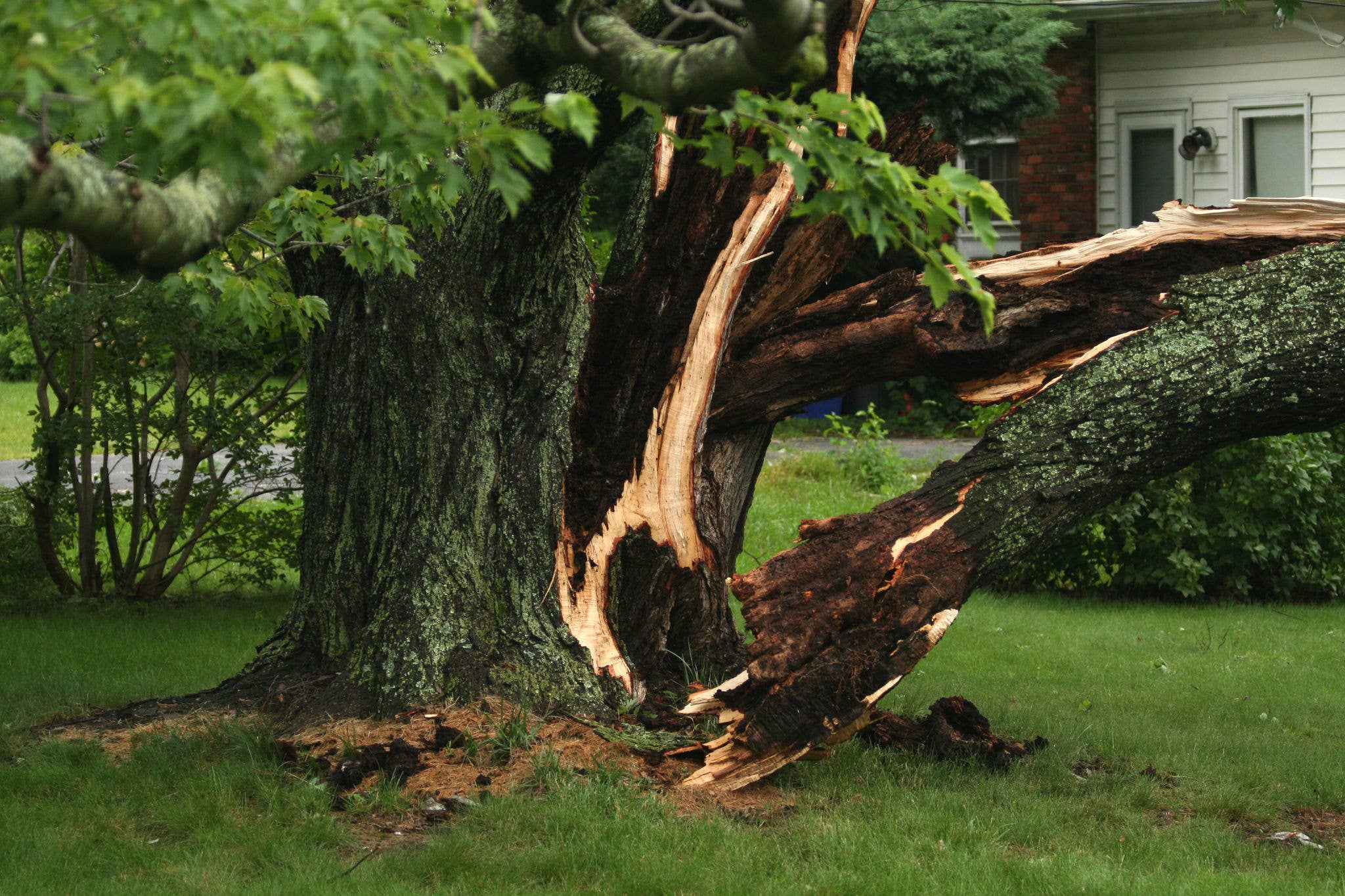
Homeowners insurance may cover damage from fallen trees, but it depends on why the tree fell and exactly what it damaged. Things can get even trickier when the tree in question belongs to your neighbor—or if your tree damages a neighbor’s property.
If that sounds confusing, don’t worry; we’ll help explain how home insurance can help with damage from fallen trees.
Find out more about home insurance.
Find out more about home insurance.
Home insurance coverage will only apply to fallen tree damage if the tree fell due to a covered peril. (A “peril” is a specific event or risk, some of which are not included in insurance coverage.)
Generally, whether home insurance will cover tree damage comes down to why the tree fell. If the tree fell due to sudden and/or accidental cause, home insurance will likely cover the damage. This includes things like:
Home insurance will not cover damage caused by "at risk" trees, meaning they were either completely dead or in poor health when they fell.
Insurers consider it your job, as the homeowner, to remove trees that are at risk of future falls. Failure to do so is considered negligence on your part.
Always check standing trees to ensure they're:
Home insurance will not pay to remove a decaying tree or a rotten tree that’s still standing. You should absolutely remove trees that are possible threats, but you’ll have to cover the costs yourself.
The out-of-pocket cost of removing an at-risk tree can be staggering, but it pales in comparison to the damage it could cause if it falls. Since home insurance won't pay to remove trees that could fall in the future, it's up to you as a homeowner to check the health of your trees.
Here are a few tips to preventing tree falls:
Home insurance coverage for fallen trees depends not only on why the tree fell, but also what it damaged. In most cases, there must be some structural damage involved for insurance to pay for removing a fallen tree. Some insurers provide coverage to remove trees that simply fell in your yard (as long as they fell due to a covered peril listed above), but it's usually not much.
An exception is when a fallen tree blocks access points to the house, especially if there are accessibility issues at play (a ramp for a wheelchair, for example). In those cases, some policies can provide limited coverage for removal.
Where the tree comes from is usually irrelevant. If the tree falls due to a covered peril and causes damage, file a claim and pay your deductible. Your dwelling coverage should cover your neighbor’s tree falling on your house.
The same is true for your neighbors—their dwelling coverage protects them from your tree falling on their house.
However, dwelling coverage may not protect you or your neighbor if negligence is involved. If a tree damages someone else’s home because the owner failed to care for it, they’ll be responsible for paying the other person’s damages.
Fallen trees can be very damaging to your home. Do everything you can to take care of them when they’re healthy and remove them when they’re dying.
If you’d like to know more about homeowners insurance and fallen trees, talk to your insurance agent today—they can help you determine how much coverage you need and answer any of your questions.
Published 9-15-25
Updated 4-15-26
Dwelling coverage protects the structure of your home from fire, wind, hail and other covered perils. Learn what dwelling insurance covers, what it excludes and how much coverage you may need.

Explore what homeowners insurance covers for severe weather including wind, hail, lightning, and tornado damage. Learn about coverage limits and exclusions.

Homeowners insurance protects your investment in your home, but how much home insurance do you need? Learn how and when to set home insurance limits.
Contact your rep or call us at 866-COUNTRY (866-268-6879). Find out more about home insurance.
Home insurance policies issued by COUNTRY Mutual Insurance Company®, COUNTRY Casualty Insurance Company® or COUNTRY Preferred Insurance Company®, Bloomington, IL.
COUNTRY Financial® is a family of affiliated companies (collectively, COUNTRY) located in Bloomington, IL. Learn more about who we are.
We take pride in providing accurate, truthful information in our articles. See our editorial standards to learn more.
These are examples and used for illustrative purposes only. Not all physical damages losses are covered. Coverage is subject to policy terms, conditions, and exclusions.